
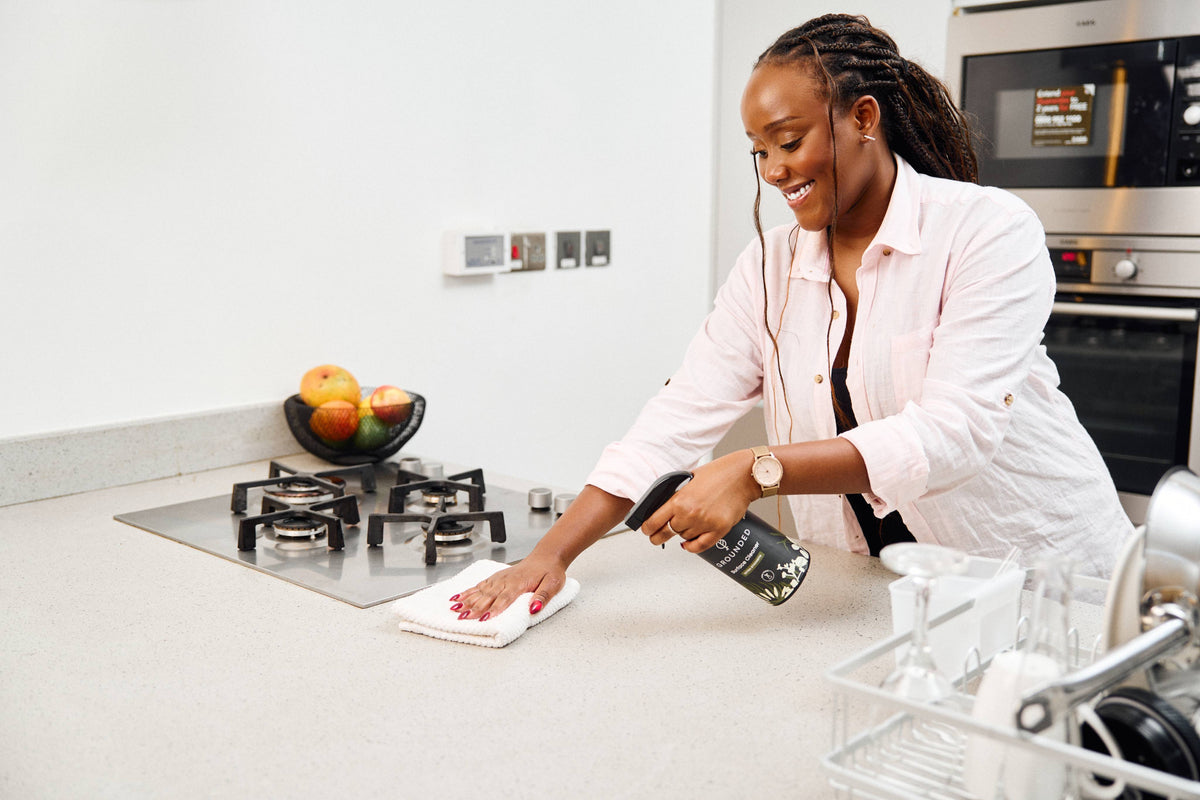
A Professional’s Guide to Housekeeping at Home
Our best tips learned from professional cleaning teams
Welcome to the New Clean.
Whether you’re a full-time housekeeper or managing your own busy home, you deserve products and methods that work with your body, not against it. Traditional cleaning products often look powerful on day one, but over time, the harsh chemicals in them can damage your health, your surfaces, and our shared environment.
Many conventional cleaners contain chlorine bleach, ammonia, and synthetic fragrances that can irritate your lungs, skin, and eyes. With regular exposure, they can even contribute to hormonal problems, asthma, and some cancers.
We often hear about skin sensitivities from cleaning products - but there are also longer term health impacts to worry about. For example, breathing in chlorine bleach regularly has been compared to smoking 20 cigarettes a day!
And when those chemicals wash down the drain, they don’t just disappear - they end up in our water and soil.
Grounded was created to change that.
Our products are safer for YOU, the user, and still tough on dirt, germs, and smells.
This guide shares our favourite professional housekeeping tips - the ones we’ve learnt from professional cleaning companies and hospitality partners like Eleve, and adapts them for homes and housekeepers.
The Keys to Success?
- Team • Time • Tools • Products
- Tidy → Clean → Disinfect,
- Start High to Low, Dry to Wet.
1. Team: You Are the Heart of the New Clean
Even if the “team” is just you, how you work matters more than how hard you work.
Keys to success:
- Know the house’s preferences. Every household is different. Some want sheets washed weekly, others every two weeks. Some care more about the kitchen; others about sparkling bathrooms. Align with your family or employer so you’re meeting their expectations, not guessing.
- Follow a consistent routine. Doing tasks in the same order each day means you forget less, move faster, and feel less stressed.
- Take care of your health. Avoid harsh chemicals whenever possible. Your lungs, skin, and fingernails are not disposable. (We’ve heard too many stories of nails peeling off after years of using conventional laundry products.)
- Communicate problems early. Report mold, leaks, broken fixtures, or strong smells so they can be fixed—cleaning alone won’t solve everything.
When you’re trained, respected, and safe, the whole home feels the difference.
2. Time: Plan Your Day So Time Works for You
Professional housekeepers don’t just “start anywhere.” They follow a flow.
General order that works well in most homes:
- Start with common areas – toilets, living room, dining room, kitchen. These are the busiest spaces; making them usable first sets the tone for the whole day.
- Then move room by room – bedrooms, extra bathrooms, balconies, or outdoors.
- Rotate deep cleaning – choose a weekly or monthly “deep clean day” to handle curtains, behind furniture, grout, appliances, etc.
Time-saving tips from the pros:
- Start laundry early. Put in a load at the beginning of your day so it can wash while you clean other areas.
- Let products soak. When using Grounded Toilets, Scouring Powder, or Citrus Concentrate on tough stains or limescale, let them sit and soften the dirt while you move on to another task.
- Plan daily vs weekly vs monthly tasks. Not everything has to be done every day. Use a simple checklist so you don’t carry everything in your head.
Time is your friend if you give every minute a purpose.
3. Tools: Set Yourself Up Like a Professional
Great housekeeping is much easier with the right tools—and when you use them correctly.
Grounded-approved essentials:
- Microfiber cloths for dusting and wiping surfaces (they trap dust instead of pushing it around).
- Colour-coded cloths/towels – one colour for bathrooms, one for kitchen, one for general surfaces. Never clean a toilet with a cloth you later use in the kitchen.
- Microfiber spray mop – traditional string mops often hold dirty water and spread germs around. Microfiber mop pads can be washed after each use, which is cleaner and more hygienic.
- Gloves – especially for bathrooms, Scouring Powder, and Fabric Brightener.
- A good broom, dustpan, and brush for corners and edges.
- A squeegee for glass and shower screens.
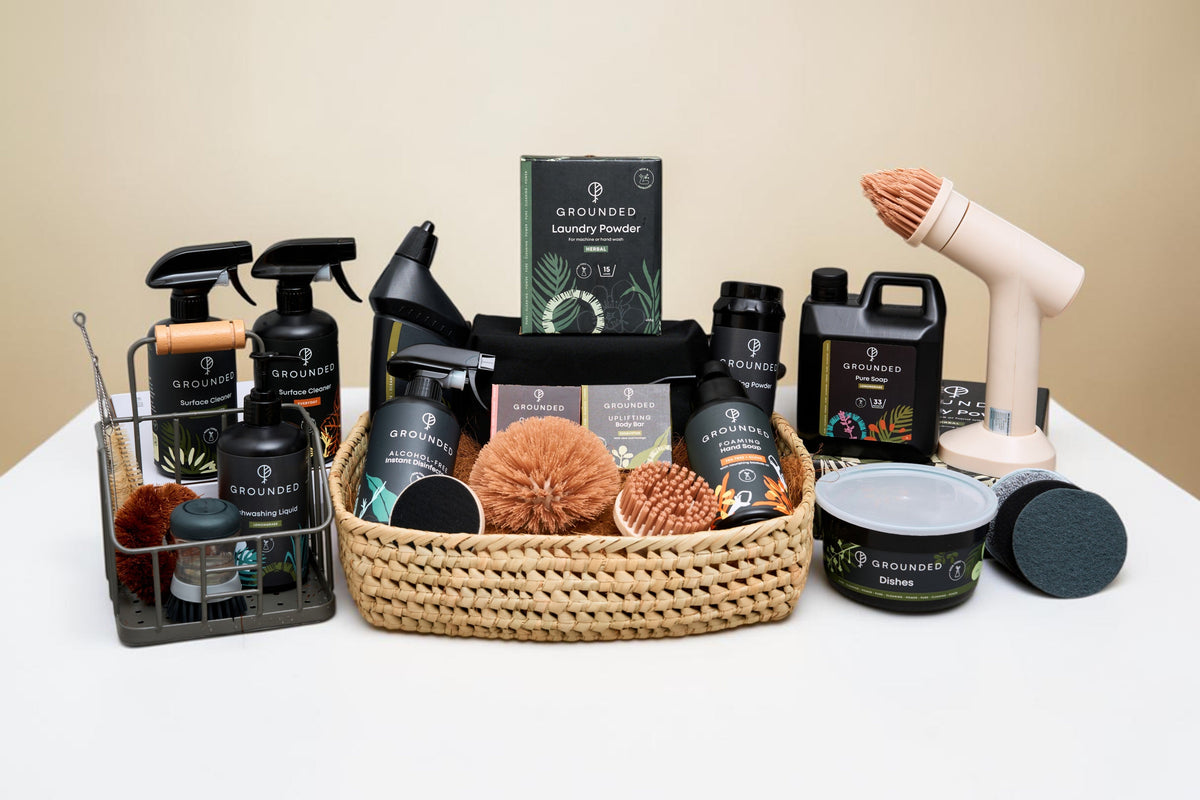
- Labeled spray bottles – refill from larger Grounded jerrycans and clearly label each bottle you want to live in a certain room - eg - we love to put an Instant Disinfectant in each bathroom - we just mark it on the back of the label so it doesn’t walk away.
Remember: your tools also need cleaning. Wash mop pads and cloths daily so you’re not spreading yesterday’s germs into today’s clean home.
4. Products: Welcome to the New Clean
Natural cleaning products made with plant-based ingredients can be both gentle and effective. They remove grease, dirt, and germs without filling your lungs with toxic fumes.
At Grounded, we follow simple product guidelines:
- Many products are multipurpose. For example, Pure Soap, Multipurpose Concentrate, and Citrus Concentrate can be used on many surfaces- always check the label.
-
Follow the measurements. More is not better and can make rinsing harder and floors sticky.
- 1L jerrycan cap = 7.5 ml (4 caps = 30 ml)
- 5L jerrycan cap = 15 ml (2 caps = 30 ml)
- Keep spray bottles and refill from jerrycans. This saves money and reduces plastic waste.
-
Never mix products unless directed.
We especially do not like chlorine bleach, ever ever. But if it’s in the home, never mix bleach with:- Vinegar
- Ammonia
- Detergent
If you’re unsure whether a product is safe for a surface: test a small hidden area first. Your first rule is always: Do No Harm.
The Pro Method: Tidy → Clean → Disinfect
Most people jump straight to “cleaning,” but the professionals know there are three steps:
-
Remove / Tidy
- Put everything in its proper place.
- Collect dirty dishes from all rooms and bring them to the kitchen.
- Clear counters, beds, and floors so you’re not cleaning around clutter.
-
Clean
- Use Grounded Surface Cleaner, Pure Soap, Multipurpose Concentrate, or Citrus Concentrate to remove grease, dirt, soap scum, and visible mess.
- Wipe surfaces, sinks, taps, countertops, and tiles.
-
Disinfect
- Once surfaces are visibly clean, use Grounded Instant Disinfectant on toilets, light switches, tap handles, door knobs, cutting boards, and any stinky or high-touch surfaces.
- Let it sit for the recommended contact time or air-dry.
Why this order?
Disinfectants only work properly on clean surfaces. If you spray disinfectant on top of dirt, you’re mostly “perfuming” the mess, not killing germs.
The Three Golden Methods: High to Low, Dry to Wet, Disinfect on the Way Out
These three habits are used by professional hospitality teams all over the world:
1. High to Low
- Start with high areas: ceilings, vents, top of wardrobes, curtain rails, shelves.
- Then move to eye-level surfaces and counters.
- Finish with floors.
If you mop and then dust shelves, all the dust falls onto your clean floor and you’ll have to redo it. High → low saves time.
2. Dry to Wet
- Start with dry tasks: dusting, sweeping, vacuuming.
- Then move to wet tasks: wiping with damp cloths, mopping, scrubbing with soapy water.
This keeps dust from sticking and turning into mud, and it protects delicate surfaces.
3. Disinfect on the Way Out
- Make disinfection your last step in each room.
- As you leave, quickly spray and leave to air-dry: door handles, switches, remote controls, toilet flushes, and taps.
This makes sure the last thing you did in the room was about germ control, not spreading them back around.
Daily vs Deep Cleaning: Think Like a Pro
Daily / Regular tasks:
- Tidy and remove clutter.
- Make beds and reset bedrooms.
- Wash dishes and wipe kitchen counters.
- Sweep or vacuum high-traffic floors.
- Quick mop of key areas (kitchen, bathrooms).
- Clean bathroom sinks, toilets, and shower surfaces.
- Disinfect high-touch areas with Instant Disinfectant.
- Use Freshening Spray or open windows to improve air flow.
Weekly / Monthly deep clean ideas:
- Wash curtains, bathmats, and throw blankets.
- Move and clean behind big furniture.
- Descale faucets and showerheads with Citrus Concentrate or vinegar.
- Scrub tile grout with Scouring Powder.
- Clean inside appliances (ovens, microwaves, fridges).
- Rotate “extra deep” tasks so no area is forgotten.
Fresh Air Is Also a Cleaning Tool
One of the simplest professional tips:
Open windows whenever you can.
Fresh air:
- Reduces smells without synthetic air fresheners.
- Helps surfaces dry faster, which slows mold growth.
- Makes the home feel lighter, cleaner, and more welcoming.
If you use air fresheners, avoid synthetic ones that just mask smells with chemicals. Choose essential oil-based sprays like Grounded Freshening Spray or simply rely on good ventilation.
Ready to Go Deeper?
This guide brings together some of the best tips we’ve learned from professional cleaning companies and hospitality teams, adapted for homes and housekeepers who care about their health.
If you're a housekeeper, home manager, or hospitality business that wants to train your team to a professional standard -from attitude and appearance to systems and service - ask us about our friends at Eleve for hospitality training.
Together, we’re building a future where clean homes don’t cost us our health.
Welcome to the New Clean.


Leave a comment
This site is protected by hCaptcha and the hCaptcha Privacy Policy and Terms of Service apply.