

Ingredient Transparency in Kenya: What's in Home Care
Ingredient transparency is something we take for granted with food, yet it almost disappears the moment you pick up a bottle of home care in a Nairobi supermarket. Flip over your laundry detergent, dish soap, or surface spray, and you will rarely find a full list of what is actually inside. You might see a few broad categories, a warning symbol, or one vague word: "fragrance." For products that touch our clothes, our dishes, and the surfaces our families live on every day, that gap matters far more than most of us realize.
Why cleaning products don't tell you everything
Around the world, cleaning products are not held to the same labeling rules as food or cosmetics. In the United States there is still no federal law requiring companies to list the ingredients in household cleaners at all. In the European Union the rules are a little better but still limited, and manufacturers only have to name broad categories rather than the specific chemicals. Categories like “% anionic surfactant” are not very transparent for the average consumer. So even a careful shopper is usually reading a product's job description, not its real contents.
Here in Kenya the picture is similar. The Kenya Bureau of Standards (KEBS) sets quality and safety standards for soaps and detergents, and locally made products must carry the Standardization Mark. Those standards matter, and as a Kenyan manufacturer we meet them. But like most of the world, they focus mainly on how a product performs and how it is labeled for safety, not on publishing everything that goes inside. Knowing exactly what is in your cleaning products is still not something the label guarantees you.
The part most shoppers never hear about
There is one more wrinkle that is worth knowing. Commonly big multinational brands often sell different versions of the same product in different countries. What goes into a detergent or cleaner in one market is not always what goes into the "same" product on a shelf in Nairobi. These choices are shaped by each country's regulations, local price expectations, and which ingredients are cheapest to source. Europe, for example, follows a precautionary approach, restricting an ingredient if it might be harmful until it is proven safe. Many markets, including ours, do not take that approach, so an ingredient limited in the EU can still turn up in products sold here.
We are not pointing fingers at any one company. The point is simpler: because Kenya, like most of the world, does not require a full ingredient list on home care, it is genuinely hard for shoppers here to know which version they are buying, or what is in it.
The hidden cost of what you cannot see
This is more than a paperwork problem. As independent groups like the Environmental Working Group audit everyday products, they keep finding cleaning product ingredients linked to real health concerns. That innocent "fragrance" on your label can be a blend pulled from thousands of possible chemicals, some of them known allergens and some flagged as hormone disruptors. Other common ingredients have been associated with asthma, skin irritation, and, in certain cases, cancer.
The tricky part is timing. Regulation moves slowly, and the science often runs ahead of the label. Until the rules catch up, the guesswork falls on you. And these are not products you use once and forget. They sit on your bedsheets, your children's clothes, your plates, and your kitchen counters, day after day. Small exposures add up, and you cannot make a safer choice about something you are not allowed to see.
Why ingredient transparency is built into Grounded
At Grounded, showing you what is inside is not a marketing badge we added later. It is built into how we make things here in Kenya, and there are three simple reasons for it.
The first is respect. You deserve to know exactly what you are bringing into your home, full stop. The second is accountability. When we publish every ingredient, we are holding ourselves to it, which keeps our formulas honest and genuinely simple. We are not hiding a fragrance cocktail behind a single word. The third reason is freedom, and it is the one people find most surprising, so it is worth its own section.
When you know what is inside, you can do more with it
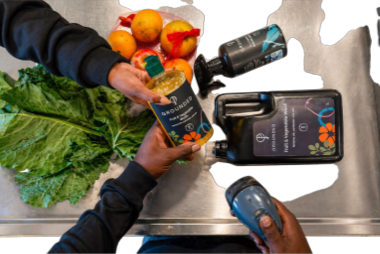
When a product is made from a few recognizable, close-to-nature ingredients, it stops being a mystery and starts being a tool. Take our Stain Remover. It is really just pure Castile soap and hydrogen peroxide. Once you know that, you realize it is not only for laundry. That same simple pairing can lift a mark from upholstery, brighten tired grout, or rescue a favorite bag.
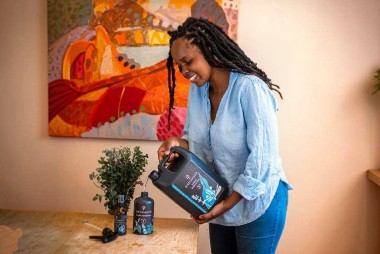
Our Pure Soap is the clearest example. Because it is genuine plant-based Castile soap and nothing else, it is quietly one of the most versatile things you can own. People reach for it for dishes, floors, hand washing, cleaning brushes and tools, and even bathing pets. Our laundry and dish bars invite the same creativity: brilliant for travel and camping, for hand-washing delicates, or for treating a stain on the go. You can only use a product this freely when you trust exactly what is in it. A mystery formula keeps you boxed into a single instruction on the back label.
That is the quiet promise behind transparency: the closer to nature a product is, the more free you are to use it. One responsible caveat, though. We always recommend following the usage guidance on our labels, especially for dilution and for delicate surfaces, so you get great results without any surprises.
The bottom line
Ingredient transparency should be the baseline, not the exception, especially for the products Kenyan homes rely on every single day. The rules will get there eventually. Until they do, we would rather simply show you and let you decide.
Curious what your favorites are really made of? Explore the full ingredient list on any Grounded product page, or message us on WhatsApp to order. Start with Pure Soap and see just how much one honest, made-in-Kenya product can do.
Sources (links are also embedded inline in the text above; keep or remove this block at publish, per house style):
-
Environmental Working Group, Guide to Healthy Cleaning: https://www.ewg.org/cleaners/content/secret-ingredients/
-
Kenya Bureau of Standards, About Our Standards: https://www.kebs.org/about-our-standards/

Leave a comment
This site is protected by hCaptcha and the hCaptcha Privacy Policy and Terms of Service apply.