
Article: Pet-Friendly Cleaning Products in Kenya: Myths vs Facts
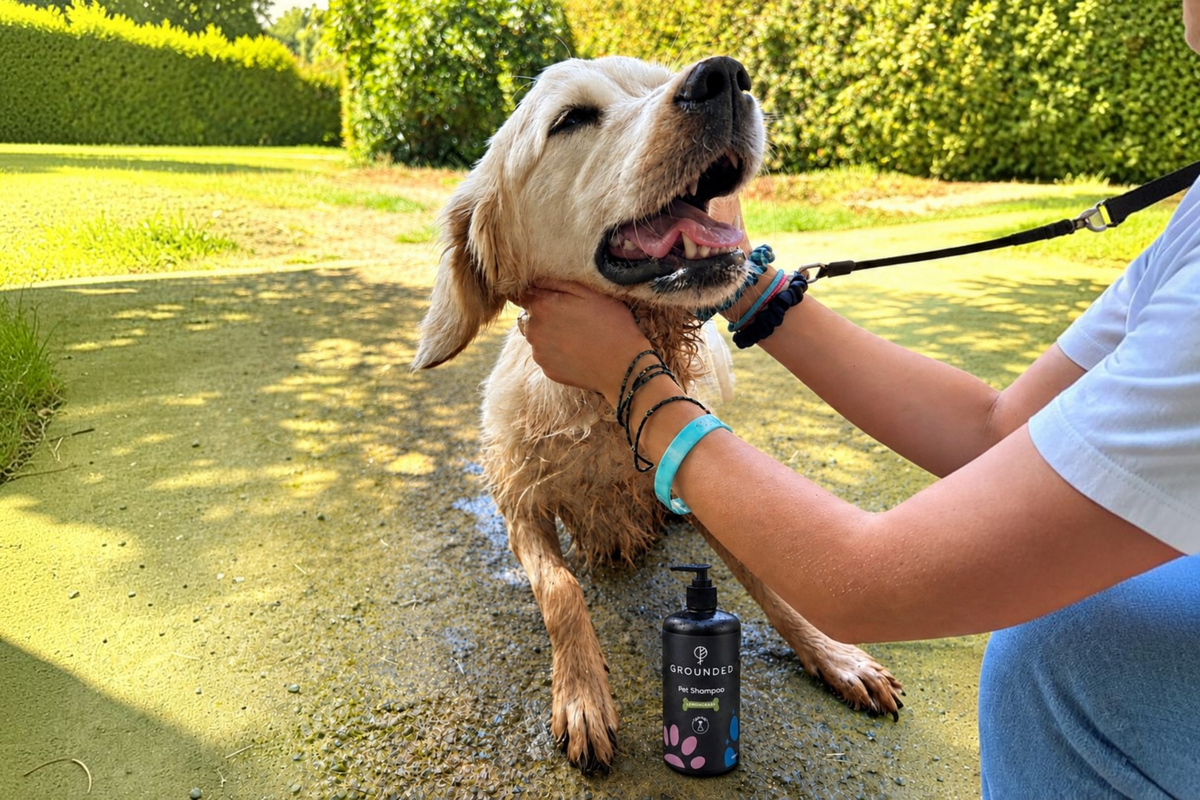
Pet-Friendly Cleaning Products in Kenya: Myths vs Facts
Pet-friendly cleaning products in Kenya are less about the label and more about what is in the bottle and how you use it. The usual trouble spots are cleaning residue on floors, concentrated essential oils, strong fragrances, insecticidal shampoos and human shampoo, and cats are especially sensitive to several of these. Below, a Nairobi vet and a Kibera animal welfare team help us sort five common myths from the facts.
We get asked about pets and cleaning products a lot: at markets, in DMs, even at family gatherings. "Is this floor cleaner safe for my dog?" "Can I just use my own shampoo on the puppy?" More of us in Nairobi are bringing pets home, and our pets live right in the middle of our cleaning routines.
Dr Nickson Lang'at of Mobivet Veterinary Clinic, which has branches in Kileleshwa and Rosslyn, puts the starting point simply:
"I would advise owners to focus on the ingredients rather than labels such as 'natural,' 'antibacterial' or 'disinfectant.'"
Myth 1: "Essential oils are always dangerous for pets"
The fact: it depends on which oil, how concentrated it is, and how your pet is exposed to it.
Dr Lang'at explains that "safety depends on the specific oil, its concentration, the formulation and the way the product is used." He adds: "There is no single concentration that can be considered universally safe for all essential oils, dogs and cats."
The oils he flags most often in household and personal care products are tea tree, eucalyptus, peppermint, cinnamon, wintergreen, pennyroyal and some citrus oils, especially in concentrated form. Cats need extra care because they can be exposed "not only through inhalation or direct contact, but also when they groom themselves after oils have settled on their coat."
The ASPCA Animal Poison Control Center gives the same advice: concentrated essential oils can harm dogs and cats, and oils should not be applied directly to pets. The Ontario SPCA notes that even diffused oils can be a problem for some cats.
Where lemongrass fits in our Pet Shampoo
Our scented Pet Shampoo contains a small amount of lemongrass essential oil. Here is why that is a very different exposure from a bottle of concentrated oil:
- The amount is small. Lemongrass essential oil makes up about 0.4% of the Pet Shampoo formula: 2g in a 500ml bottle.
- It is a rinse-off product. The oil is diluted again by water as you lather, and most of it goes down the drain when you rinse. Lisa Bronner, who writes about washing dogs with castile soap, makes the same point: concentration, dilution and short contact time keep exposure low.
- It is not a flea or tick treatment. Lemongrass is there as a light, natural scent. If your dog has fleas or ticks, talk to your vet.
- For cats, kittens and puppies, choose our unscented Pet Shampoo.
What to do:
- Never apply undiluted essential oils to your pet's skin or coat, or leave them where your pet can lick them.
- Keep diffusers out of your pet's space. Ventilate the room and make sure your pet can leave.
- If you have a cat, a very young pet or a pet with a health condition, ask your vet before introducing a new scent.
- Call your vet if your pet shows signs Dr Lang'at lists after exposure: "drooling, vomiting, weakness, tremors or breathing difficulty."
Myth 2: "Natural means safe"
The fact: natural is not a safety guarantee, and "chemical-free" is not a regulated term.
"Natural or plant-based products are not automatically safe for pets, particularly cats," says Dr Lang'at. That is why we suggest looking at the ingredient list, not the front label. A short, readable list you can show your vet is a good sign.
Our Pet Shampoo, for example, is made from saponified coconut, sunflower and canola oils, citric acid, water, and glycerin. It is sulfate-free, paraben-free and contains no synthetic fragrance.
What does "saponified oils" mean? Saponification is the traditional soap-making process that turns plant oils into true soap. It is the same as castile soap, and it is why a short ingredient list can still clean well. Glycerin is a gentle moisturizer that helps stop your dog's skin and coat from feeling stripped after a wash.
It also helps to know the difference between a product used around your pet and one used on your pet. Dr Lang'at explains: "A product that is safe to use around pets is designed to minimise exposure through surfaces, air or accidental contact. A product used on a pet has direct and prolonged contact with the skin or coat, so its formulation and safety requirements are different."
Myth 3: "The shampoo that kills fleas and ticks is the best one"
The fact: the strongest shampoo is rarely the right one for an everyday bath, and a natural insecticide is still an insecticide.
Insecticidal pet shampoos are very common in Kenya, and many are based on pyrethrum, a natural extract from a flower grown here. Used correctly on dogs, pyrethrins are generally considered safe. Cats are another story. VCA Animal Hospitals reports that cats are very sensitive to pyrethrins and pyrethroids, and poisoning can be life-threatening.
Dr Lang'at adds that some flea and tick products contain chemicals such as permethrin or amitraz, which "may be safe for certain animals but dangerous to others. For example, high-concentration permethrin products can be highly toxic to cats." In a home with both a dog and a cat, a cat can be exposed simply by grooming a freshly washed dog or sharing its bedding.
Many insecticidal shampoos also ask you to leave the lather on for 15 to 30 minutes, and the protection wears off within days, so you wash again.
The Marie-Louise and team at Pawmoja, who take in puppies that often arrive with fleas, ticks or skin irritation, have learned to ask a different question first:
"Cleaning a puppy and treating a medical condition are two different things... When we rescue a new pup, we treat parasites separately using vet-approved products, while our partner vets assess any skin issues."
They are clear that medicated shampoo should not be the default: "There's no reason to expose puppies to additional medicated products with every bath when there's no medical need for them."
Dr Lang'at's golden rule: "check the active ingredient, use the correct product and dose for the correct species, and ask a veterinary professional when unsure."
Myth 4: "Human shampoo is fine for the dog"
The fact: human shampoo is made for human skin, and it often contains fragrance and detergents that can dry out or irritate a pet's coat.
"Avoid using human products unless advised by a veterinarian, as differences in skin pH and formulation may cause irritation," says Dr Lang'at. Human skin is slightly acidic, while dog skin is generally closer to neutral. pH is not the whole story, though. How harsh the cleaning agent is matters just as much, and a gentle, plant-oil-based soap that is rinsed off well is kinder than a strong detergent.
For everyday bathing, Pawmoja keeps it simple: "a gentle shampoo, warm water, and a thorough dry."
Choosing the right wash:
- Puppies under 6 months and cats: our unscented Pet Shampoo.
- Dogs over 1 year: our liquid Pet Shampoo, or limited edition Pet Shampoo Bar, a zero-waste option made with coconut, canola, macadamia and castor oils, with diatomaceous earth and a light lemongrass scent.
- Follow the product's own dilution instructions. More is not better.
- Rinse thoroughly. Leftover suds are a common cause of itchy skin.
- Most dogs do not need frequent baths. Ask your vet what suits your dog's coat and lifestyle.
Myth 5: "A strong smell means it's working"
The fact: a strong smell tells you nothing about how clean a surface is, and it can irritate your pet's nose, paws and airways.
Pets have a far better sense of smell than we do, and they spend their lives at floor level, right where cleaning residue sits. Dr Lang'at calls residue "one of the most important considerations": "Dogs and cats may walk on freshly cleaned floors and later lick their paws, effectively ingesting small amounts of the cleaning product."
Products he advises pet owners to be cautious with:
- Quaternary ammonium compounds ("quats"), found in some disinfectants and antibacterial cleaners, which "can irritate the mouth, skin and eyes, with cats being particularly sensitive."
- Phenol-based disinfectants, "especially in homes with cats."
- Strong acids and alkalis in some toilet, drain and oven cleaners, which can cause chemical burns.
- Concentrated bleach. Diluted bleach can be used safely, but "bleach should never be mixed with ammonia or other cleaning chemicals, as this can produce dangerous fumes."
- Heavily fragranced floor cleaners and air fresheners.
For routine cleaning, he recommends "the mildest effective product, preferably low-fragrance or fragrance-free," and enzyme-based cleaners for urine and other organic stains.
That is why we like simple, low-residue options, like the ones we formulate at Grounded.
Our Multipurpose Concentrate or Pure Soap are available in fragrance-free options for all purpose cleaning without the worry!
Our Instant Disinfectant is made from hypochlorous acid and is alcohol-free and fragrance-free. Follow the label for suitable surfaces, and let surfaces dry before your pet goes back.
Everyday habits for a pet-friendly home
- Keep pets out of the room while you clean, ventilate, and let floors dry fully before they come back.
- Rinse food and water bowls and feeding areas after using any product that needs rinsing.
- Store cleaning products, pest control and medicines in their original, labelled containers, out of reach. Never mix products.
- Wash pet bedding regularly with a gentle laundry detergent (like Grounded Laundry Powder), rinse well and dry completely.
- Brief your house help. Dr Lang'at says it is "equally important to educate domestic helpers, gardeners and other household staff" on which products are safe, how to dilute them, and to keep pets away from treated areas.
- For wounds, eyes or anything medical, call your vet.
A note on crawling pests
Fleas, ants and cockroaches also live in skirting boards, window sills and the corners of the sofa, not just on your pet. Our Diatomaceous Earth is food-grade diatomaceous earth and nothing else. It works physically rather than chemically: crawling insects that walk through the dry powder lose moisture and dry out. Sprinkle a thin line where insects travel, keep it dry, and apply it gently so it does not go into the air or near your pet's face.
Diatomaceous earth is for pests in the home. It is not a treatment for a pet that already has fleas or ticks, so speak to your vet about that. And as Dr Lang'at warns, avoid "using livestock or agricultural pesticides on pets unless specifically advised by a veterinarian."
Why spay and neuter matters in Nairobi
Looking after pets well goes beyond what we clean with. This October, Grounded is supporting Pawmoja, a Kibera-based animal welfare organization. Most of Pawmoja's work is in the community: supporting local caregivers, coordinating vet care and running CNVR (Catch, Neuter, Vaccinate, Return). They also rescue vulnerable animals, care for them in volunteer foster homes and find them permanent homes.
Pawmoja is honest about the limits of rescue: "For every animal we rescue and rehome, countless others remain in need, and more puppies and kittens continue to be born every day. That's why rescue alone can never be the solution."
Sterilization also protects people. Dr Lang'at explains that population management can complement rabies vaccination, and that "almost all human rabies infections are acquired through infected dogs." Community work like this contributes to the WHO-led "Zero by 30" goal, which aims to end human deaths from dog-mediated rabies by 2030. For female dogs, neutering can also lower the risk of some health problems later in life, such as womb infections and mammary tumors, according to the British Veterinary Association.
Support Pawmoja with us this October
- Shop on our website and get 5% off your order with code PAWMOJA (minimum basket KES 5,000, excludes accessories).
- We donate 5% of net sales on those orders to Pawmoja's spay and neuter work. Round up at checkout to add a little extra. 100% of round-up proceeds go to Pawmoja.
- New adopting parents get a one-time 10% off code for Grounded.
- Follow Pawmoja on Instagram at @pawmoja_254 to meet the animals and find out how to foster or volunteer.
Pet-friendly cleaning comes down to a few simple habits: read the ingredients, use the mildest product that works, rinse well and let surfaces dry. When in doubt, choose unscented and ask your vet. Ready to make the switch? Browse our Baby, Kids and Pets range.

Leave a comment
This site is protected by hCaptcha and the hCaptcha Privacy Policy and Terms of Service apply.